
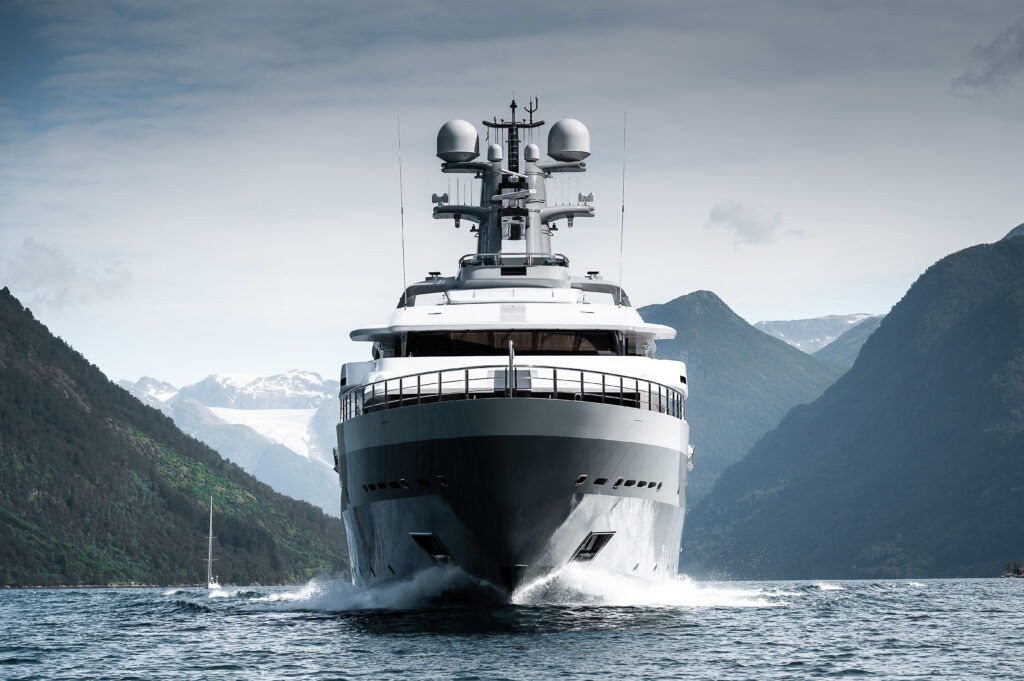
Draak: The Second Life of a Superyacht
Originally delivered in 2014, the 92.9-metre Draak has returned to Oceanco to be redesigned around an entirely new future. Now part of the Inkfish fleet alongside Leviathan, her transformation from superyacht to research and exploration platform raises an interesting question for the industry: what happens when an existing yacht is given a completely new reason to exist?
Superyachts are conceived with extraordinary specificity, designed around an owner, a programme and an idea of how life at sea should unfold. Yet yachts can outlive those original intentions. Ownership changes, ambitions evolve and technology advances. The question then becomes whether the yacht must be replaced, or whether the platform itself can evolve. In this case the question is about the second life of the yacht. Draak offers a compelling answer.
Originally delivered by Oceanco in 2014 and previously known as Equanimity and Tranquility, the 92.9-metre yacht returned to the shipyard’s Zwijndrecht facilities for an extensive rebuild. This was not simply an exercise in updating interiors or modernising systems. Draak was selected as the platform for an entirely different operational purpose: supporting scientific research and marine exploration as part of the Inkfish fleet.
Following her appearance at the Monaco Yacht Show alongside her companion yacht Leviathan, Draak is now heading to the Fort Lauderdale International Boat Show, where she will offer a very different proposition from that of a conventional superyacht.
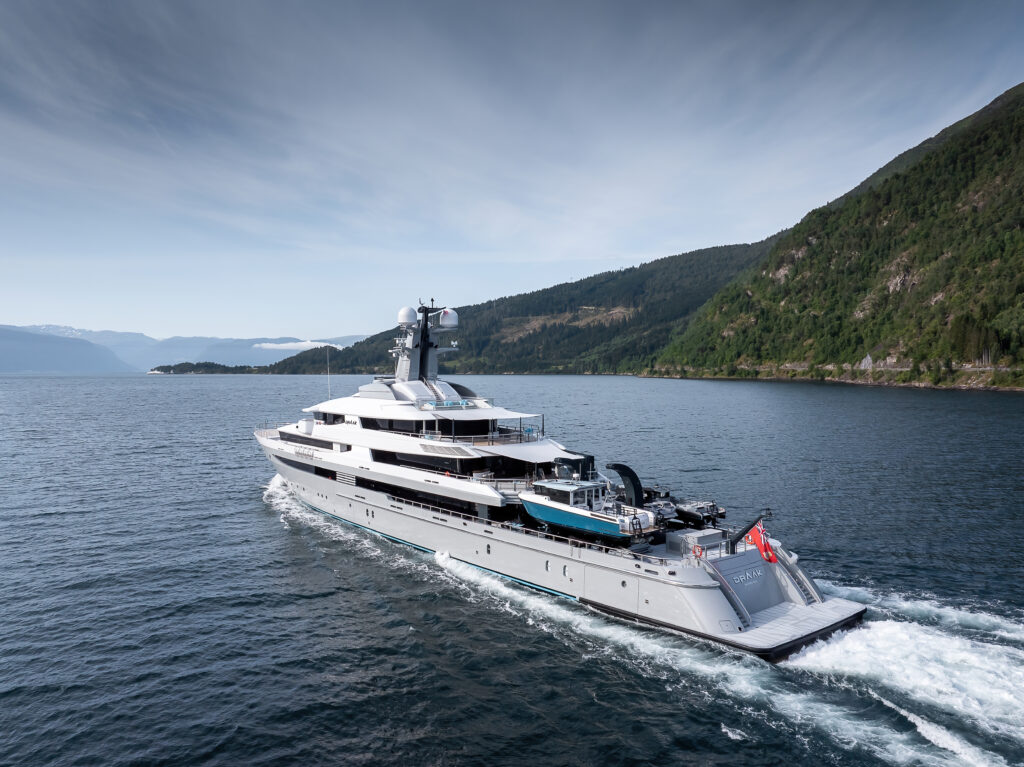
A YACHT WITH A NEW PURPOSE The transformation of Draak began with a change in purpose. Rebuilt as a companion yacht to Leviathan, she expands the fleet’s capacity for exploration and research, with the two vessels conceived to operate together. Their project teams worked closely to align onboard functionality and enable the yachts to function as part of the same wider operation.
But the relationship between the two yachts extends beyond logistics. For owner Gabe Newell, Draak and Leviathan represent an evolution in how he thinks about the people living and working aboard a yacht.
“Leviathan and Draak represent the second generation of our thinking about the community onboard and how we can optimize the vessels to serve them and achieve their goals,” says owner Gabe Newell. “I’ve always found it useful to think about the individuals you’re involved with and how your actions impact them. It’s a funny way of talking about a yacht, and one of the ways Oceanco had to adapt to what I was asking for as an owner.”
That thinking becomes tangible throughout Draak. Crew members were closely involved in the project, bringing operational experience into decisions surrounding onboard spaces, ergonomics, materials and working practices. Rather than considering crew areas purely as the infrastructure behind the guest experience, the rebuild examined how the yacht could work more effectively for the people who actually spend their lives aboard it.
The changes are striking. The former main saloon has become a shared dining room, while the upper deck saloon has been transformed into a Chef’s Lab for intimate dining, menu development and chef training. Accommodation has also been adapted and expanded to include an owner’s stateroom and eight guest cabins.
Perhaps most revealingly, Newell identifies the communal mess as one of his favourite spaces aboard.
“It’s very much the heart of the vessel, always lively and buzzing, and just a fun place to be. It has the energy of a really good neighborhood café or bar.”
It is an unconventional description of the heart of a superyacht, and perhaps that is precisely the point.
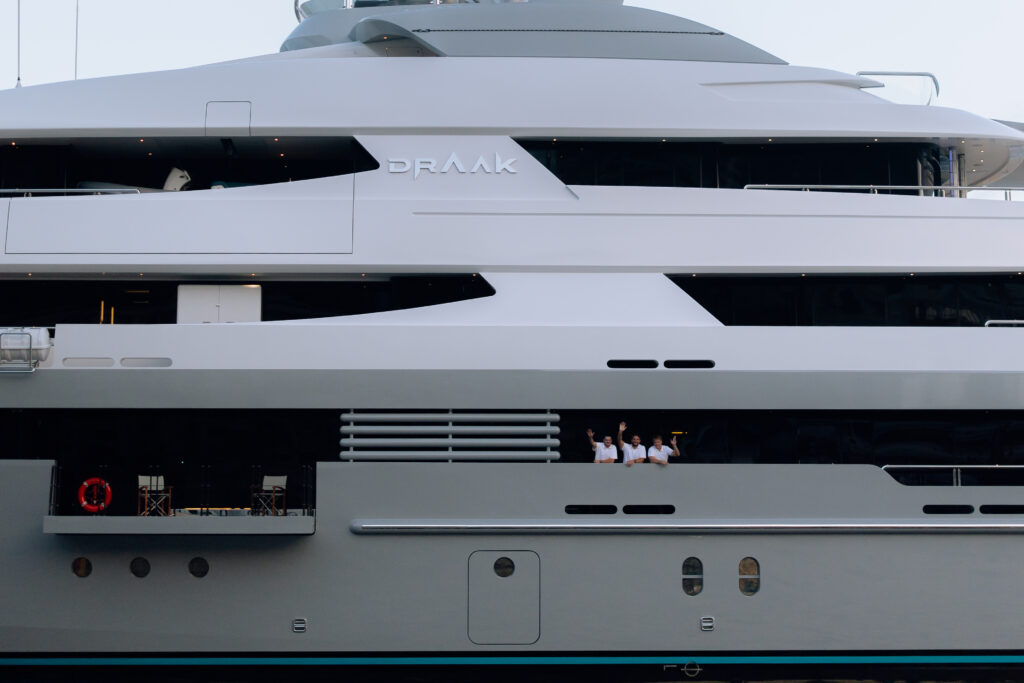
FROM BEACH CLUB TO DIVE CENTRE Nowhere is Draak’s second life more visible than in the transformation of her former beach club and spa. The space has been converted into a fully equipped dive centre incorporating diving equipment, a medical treatment room and the first decompression chamber to be installed aboard an Oceanco yacht. The six-person chamber, developed with specialist manufacturer Hytech-Pommec, supports both oxygen and Heliox decompression procedures, enabling the vessel to support deeper diving activities for which oxygen-only decompression would not be suitable.
Yet installing such specialised equipment inside an existing superyacht presented an engineering problem of its own. Rather than cutting a new opening into Draak’s structure, the decompression chamber was custom-built around the dimensions of the yacht’s existing access route. Its height was reduced, components were repositioned and a dedicated rail system was developed to manoeuvre it into position with only millimetres of clearance.
Even then, functionality was not enough. The chamber’s exterior finish, seating, upholstery, control panel and interior details were customised, and an entertainment system was integrated into the space. In other words, equipment designed for serious deep-diving operations still had to belong aesthetically and experientially aboard an Oceanco yacht.
“Achieving a yacht-quality exterior preparation and paint finish on a decompression chamber was new territory,” says Oceanco Engineering Manager Ozkan Sag. That single detail says a great deal about the project. Draak may have acquired a radically different purpose, but the expectation of finish has not disappeared with it.
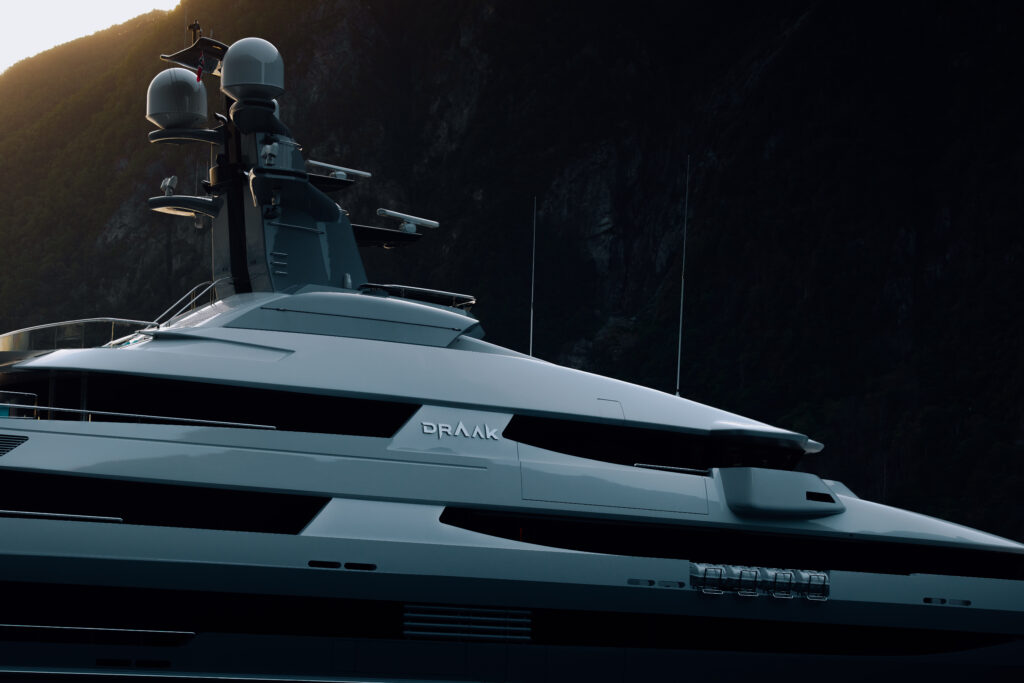
RETHINKING WHAT ALREADY EXISTS The changes extend far beyond the dive centre. The yacht’s former helideck was removed to create the clearance necessary for a dedicated tender operations area, capable of accommodating Draak’s dive boat Scylla, RIB tender Minotaur, a Nautique Paragon sports tender and two Ribeye SOLAS rescue tenders. New lifting infrastructure was introduced, including a 12.6-tonne jib crane with an 11-metre outreach and a custom twin-unit C-davit system. The swim platform was extended to incorporate an extendable boarding platform and retractable fender system, increasing the yacht’s overall length by just over one metre.
Taken individually, these are technical modifications. Together, they tell a much larger story. The rebuild demonstrates how extensively the purpose of an existing superyacht can be reconsidered when the original platform, engineering knowledge and operational ambitions are brought together. Oceanco’s original design and engineering data could be combined with the experience of the owner representatives, project teams and crews to determine what should remain and what needed to change.
“Draak demonstrates what can be achieved by rethinking an existing yacht platform for an entirely new operational purpose,” says Oceanco Life Cycle Support Project Manager Edwin Schneider. That may ultimately be the most interesting idea behind Draak.
For an industry historically captivated by the new, the largest, the latest and the unprecedented, there is another kind of innovation emerging in the ability to look at an existing yacht and imagine something entirely different. Draak has already lived as Equanimity. She has lived as Tranquility. Today, she enters another chapter with a new name, a new fleet and a fundamentally different purpose. Her second life is not an attempt to recreate her first. It is an argument for just how much more a superyacht can become.
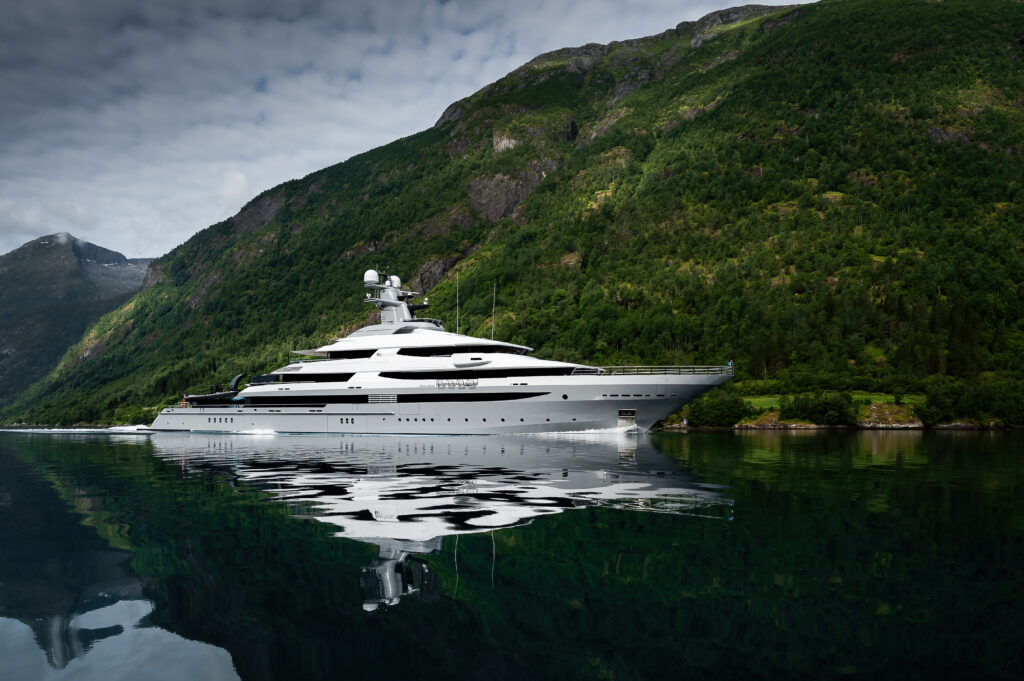
IMAGE COURTESY of OCEANCO