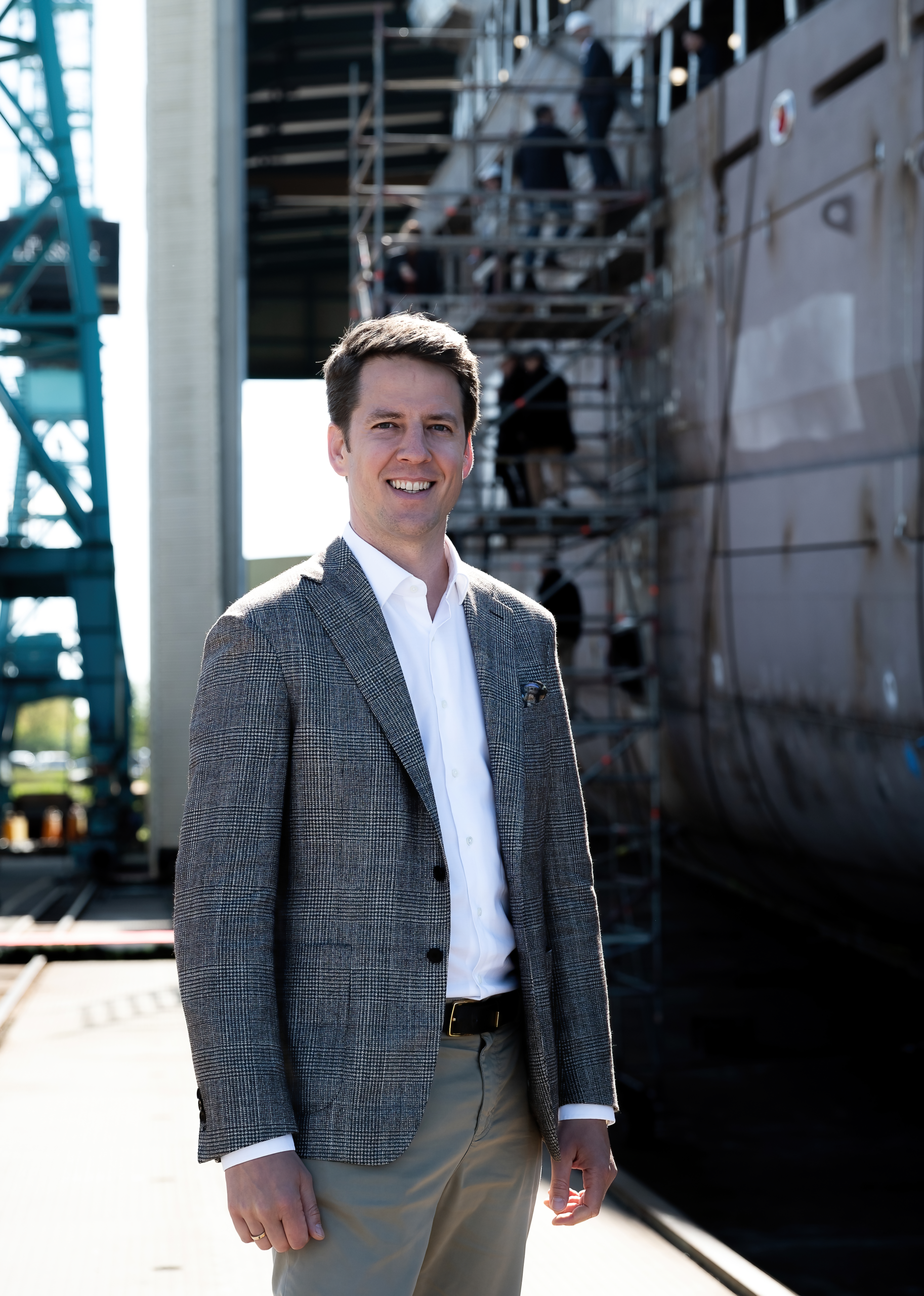
The Portrait by ✦Yachtllywood
The Weight of a Name
In conversation with Luca Raumland, Director Sales & Marketing at Lürssen
Six deliveries in a matter of months marked an exceptional moment for Lürssen. But behind the numbers lies a story of thousands of people, immense coordination and a shipyard discovering just how much its organisation can handle. Yachtllywood speaks with Director Sales & Marketing Luca Raumland about the year behind the yachts, and why six was never the goal.
Six yachts. One year.
For most industries, production is measured by volume. At Lürssen, where every yacht begins with the vision of a different owner, a different brief and often an entirely new set of engineering challenges, the equation is rather different.
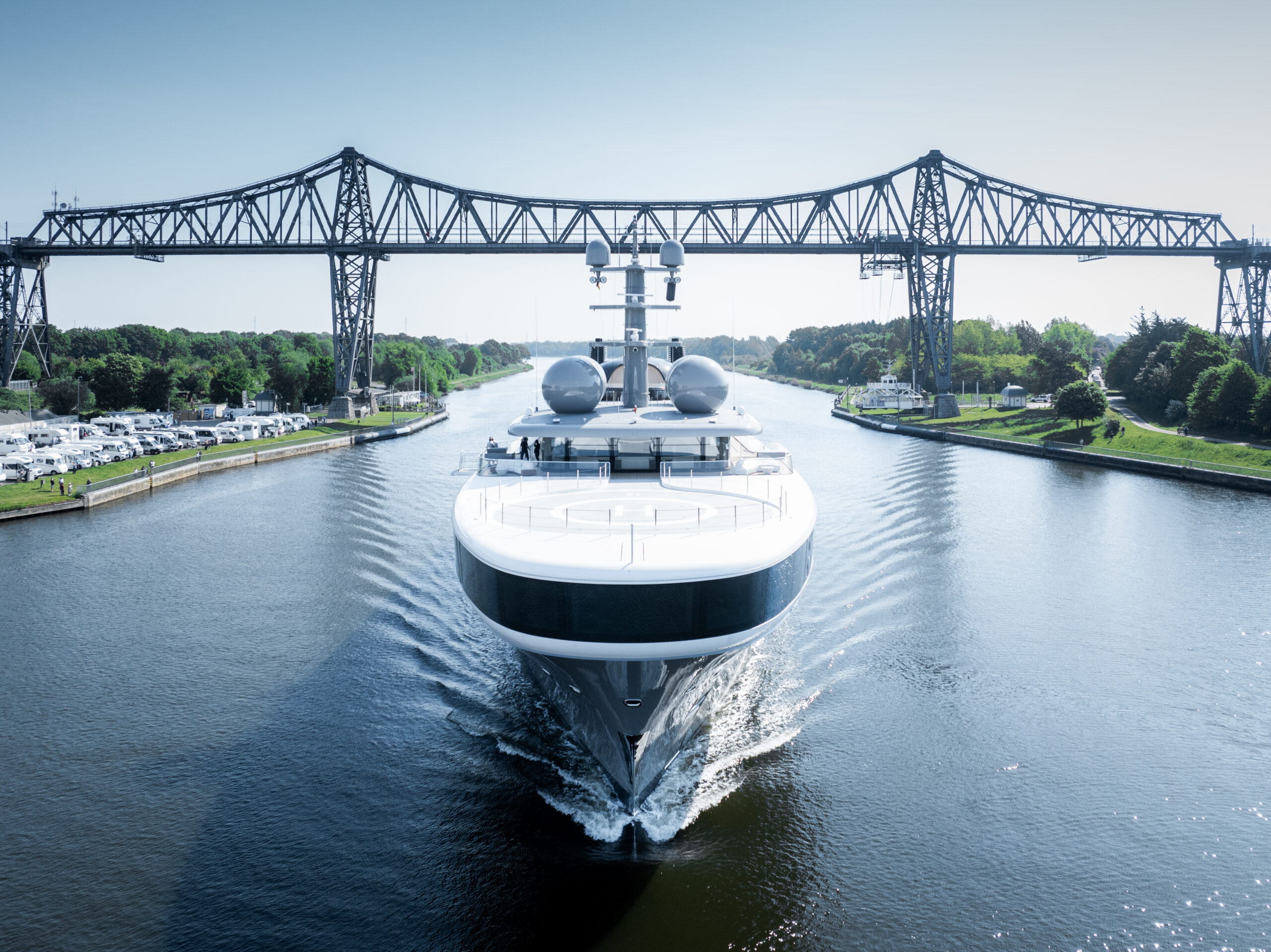
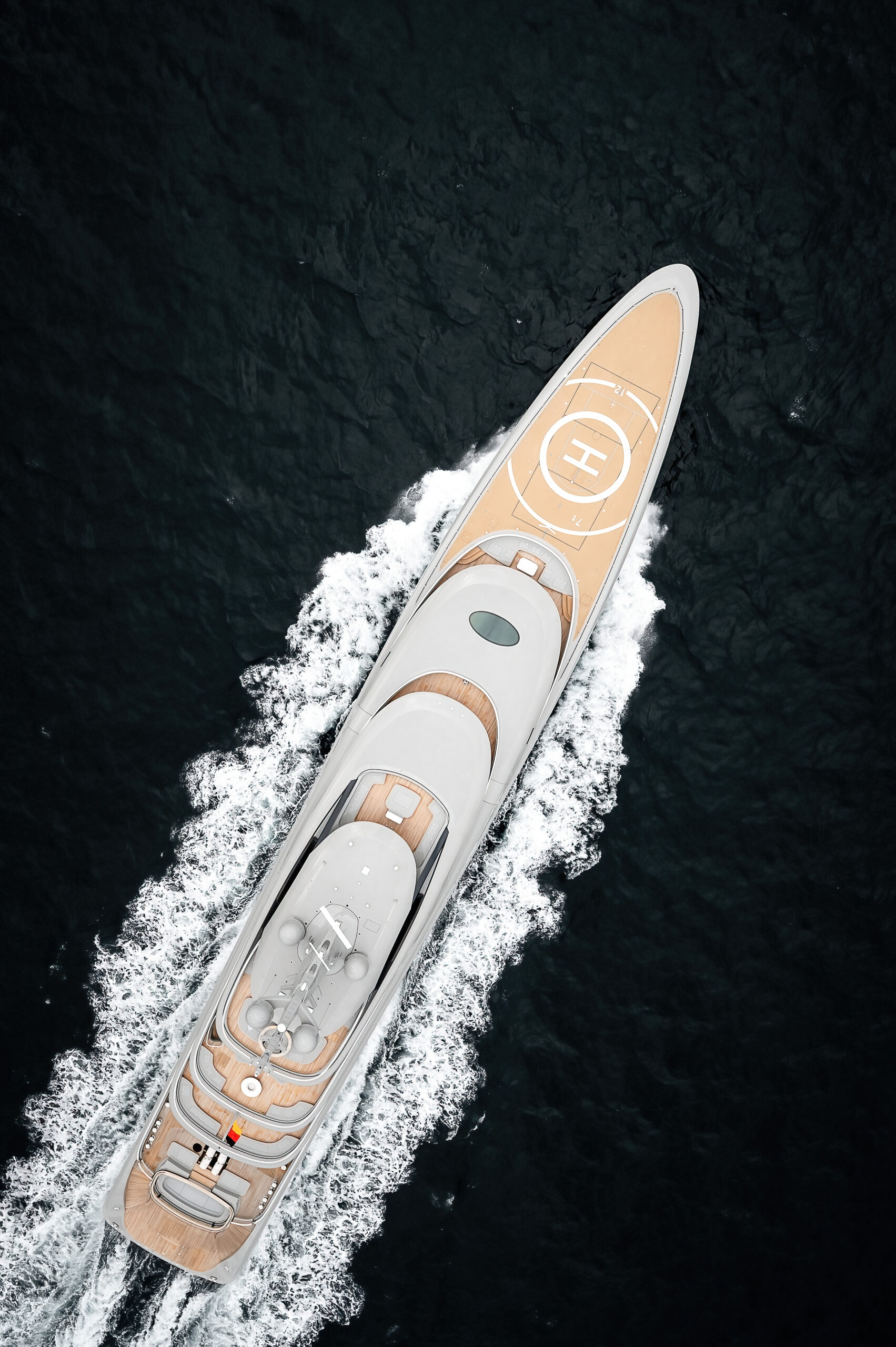
In 2026, however, six individual projects reached the same defining moment within months of one another. ODISEA, DEEP BLUE, BOARDWALK, NAUSICAÄ, O3 and NIXIE, ranging from 78 to 134 metres, each left the shipyard carrying the Lürssen name.
On paper, it makes for an impressive statistic. Inside the shipyard, the reality was rather more complicated. Because, as Luca Raumland tells Yachtllywood, delivering six yachts in one year isn't something Lürssen is particularly interested in repeating.
Luca Raumland joined Lürssen as Director Sales & Marketing in 2025, arriving at the shipyard just before an unusually demanding chapter in its history. Yachtllywood sat down with him to understand what six deliveries really meant behind the gates, and what a year like this reveals about the organisation behind the Lürssen name.
Six yachts left the yard this year, each one carrying the Lürssen name. What does it actually take, internally, to hold onto everything that name carries, six times over, in the same year?
It is not normal, and to be honest we hope it does not happen again in this form. Normally we deliver somewhere around two, maybe three yachts a year. With six, the whole organisation runs at a different level of concentration. Sea trials, commissioning, the testing teams were basically working around the clock for months. It all went well in the end, but it took an enormous commitment from everybody. If anything, a year like this shows the depth of engineering and project management we have in the house. Without that you should not even try it.
It all went well in the end, but it took an enormous commitment from everybody.
For 150 years, Lürssen has measured itself in decades, not delivery counts. Does a year like this quietly become the new reference point going forward, or is it simply what happened to align in 2026, without setting any expectation for the years after?
No. And I can give you a simple proof: next year we have no delivery at all. That tells you everything. Of course we would prefer a stable, steady production rhythm, but our yachts are bespoke, and we cannot plan when a client decides to move ahead. So six in one year, none in the next, that is not a strategy, it is simply how the timing fell. As you said yourself, we measure in decades, not delivery counts. That has not changed and it will not.
Looking back now that all six yachts have departed, what has actually changed for Lürssen? Not on paper, but inside the organisation. Has a year like this shifted the way the shipyard sees itself?
What has changed? Mainly that we now know what the organisation can do when everything has to come together at once. That is worth something. The teams got through it, the quality held up, the coordination between our sites worked even under real pressure. How we build has not changed at all. But there is a certain confidence now. If a year like this comes again, we know we can handle it.
It's said that there is no defining "Lürssen style", only a commitment to excellence. In an industry where brands often strive for instant recognition, how do you preserve a strong identity when every yacht begins with a completely blank canvas?
Good question. When I arrived at Lürssen I asked exactly the same thing, and there is no straight answer to it. The blank canvas you describe is actually the point. We do not start from a house style and adapt it. We start from the owner every time. So the identity cannot sit in how she looks, because that changes completely from one yacht to the next. It sits in the standard underneath. That is the constant, and people who know these yachts recognise it straight away, even though no two look alike.
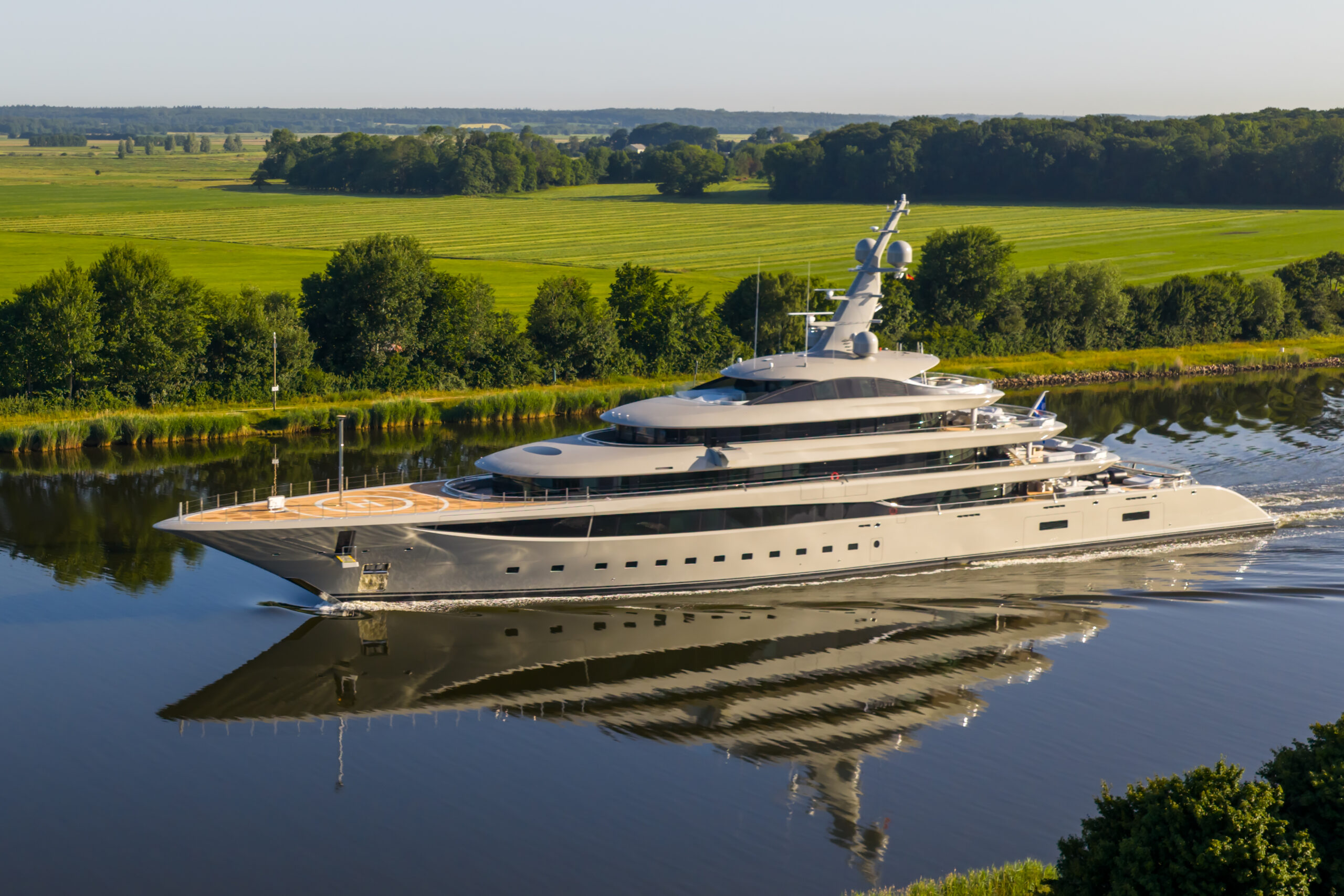
The identity cannot sit in how she looks, because that changes completely from one yacht to the next. It sits in the standard underneath.
Owners often arrive with a vision, but some of the most memorable yachts begin with questions rather than answers. Have you noticed that today's owners are searching for something fundamentally different than they were ten or twenty years ago? Not in terms of features, but in what they hope life on board will mean.
I'm probably too young, and not long enough at Lürssen, to seriously compare today with 20 years ago. But neither I nor my more senior colleagues have the feeling that owners are looking for something fundamentally different now. Yes, the yachts are technologically far more advanced than they were, but that has less to do with owner requests and more with where technology in general has gone. And of course they do offer more today than they used to, a spa, a cinema, things like that. But what people fundamentally want from life on board has stayed, in principle, remarkably steady.
What stands out about these six deliveries is not only the engineering, but the thousands of people behind it. In an industry that naturally celebrates finished yachts, how do you cultivate a culture where the invisible work is valued just as much as the final result?
"Shipbuilding is teamwork" is a sentence you hear inside Lürssen quite often, and it could not be more true. I have been lucky enough to be at a few launch events already, and it is a breathtaking moment when a yacht slides down the ramp and touches the water for the first time, with hundreds of workers standing on the pier watching. You can see what it means to them. Nobody builds something like this alone, and everyone standing there knows it.
Many of this year's innovations are things an owner or guest may never consciously notice, from propulsion systems to engineering hidden beneath the surface. Is there a particular satisfaction in creating excellence that is designed to remain invisible?
My guess: it is the combination of how an engineer thinks and our North German, Hanseatic culture. An engineer thinks differently than a designer. He knows that other engineers will understand what sits behind the surface, and there is a quiet satisfaction in that. It does not need to be seen by everyone. It just needs to be right.
Lürssen has often been responsible for turning ideas once considered impossible into reality. Internally, how do you distinguish between an ambitious request that should be pursued and one that risks becoming innovation simply for the sake of innovation?
Michael Breman always says we will do anything as long as it is not illegal or dangerous. That sums it up quite well. Pushing the boundary a bit further each time is simply part of who we are. I will not pretend every single employee is waiting for the next challenge. But the majority is, and that energy drags everyone along.
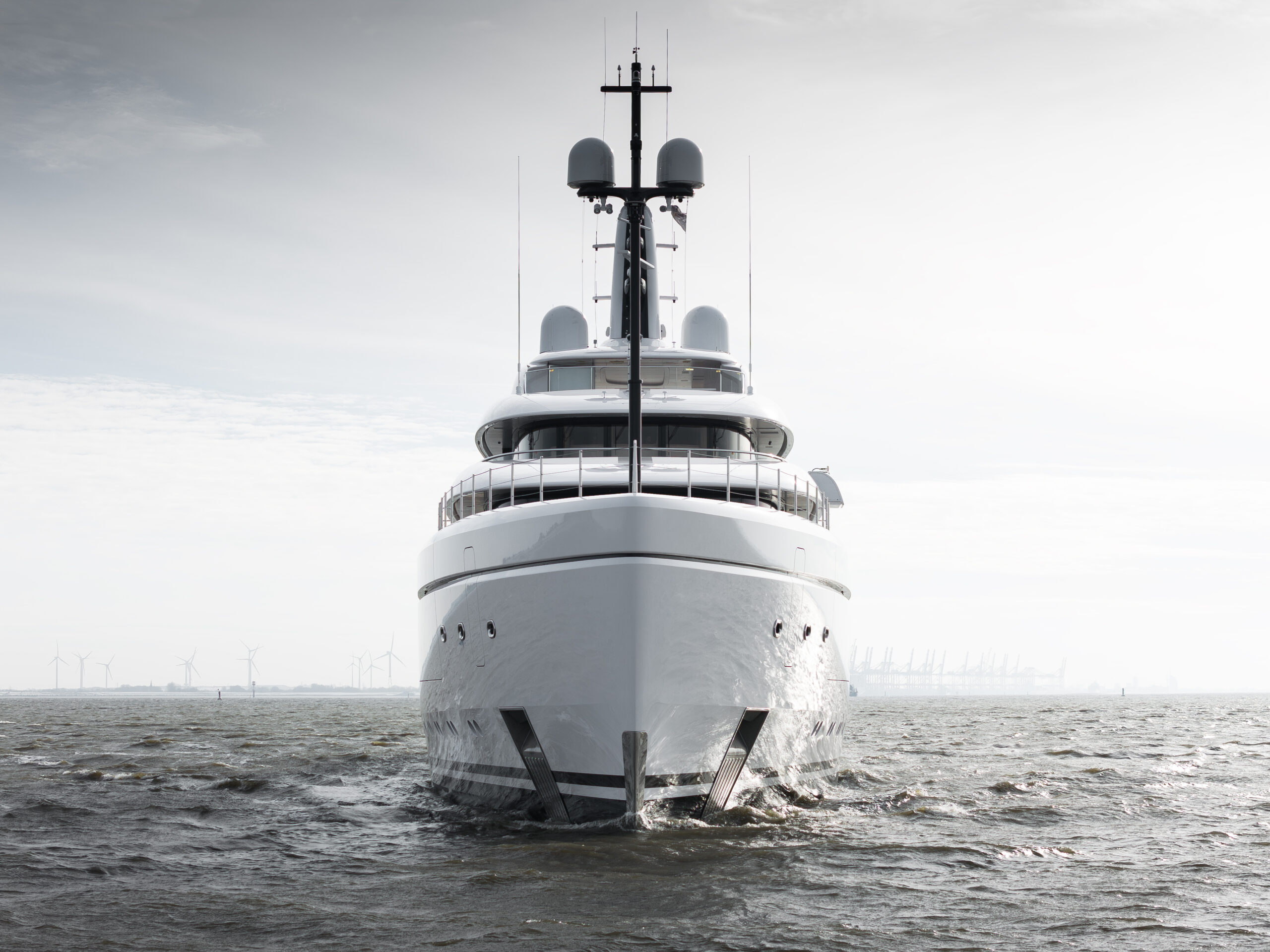
Luxury today is changing. Privacy, silence and authenticity seem to matter more than spectacle. As someone who speaks with owners from around the world, what do you believe has become the true definition of luxury at sea?
Our clients have almost everything. What they cannot buy more of is time. Most of them have very few free weeks in a year. So the real luxury is knowing that in those weeks nothing is left to chance: the privacy, the service, the whole experience exactly at the level they expect. No hotel, no resort can guarantee that. A well-built, well-managed yacht can.
Imagine someone stepping onboard a Lürssen yacht fifty years from now. The technology will undoubtedly have changed, perhaps beyond recognition. What do you hope they will still immediately recognise as unmistakably Lürssen?
Hopefully the simplest thing of all: that she still runs. Fifty years is a long time for any machine. For a Lürssen it should not be remarkable.
Our clients have almost everything. What they cannot buy more of is time.
Bubbles and Boats
For Luca Raumland, boats have been a constant rather than a career choice. Growing up on Lake Constance, he started working at a local boat dealer at 16, first selling equipment, then used boats, before completing his first new boat sale, a 33-foot Bavaria sailing yacht, shortly after turning 18. "Boat sales follows me literally all my life," he says.
What followed was almost two decades in the industry, including three and a half years with Bavaria and seven and a half years with Greenline Yachts, where he rose to Chief Commercial Officer and became closely involved in the brand's international growth and approach to hybrid yachting. He later co-founded GX Superyachts, bringing that experience into the larger custom-yacht market.
In 2025, Raumland joined Lürssen as Director Sales & Marketing, working alongside long-standing Senior Sales Director Michael Breman and leading the shipyard's marketing department as part of the next generation of its commercial leadership.
Away from the shipyard, he lives with his wife, a sparkling-wine maker, and their two young children on a vineyard in Germany's Rheinhessen region. The label reads Raumland. "That was her name before it was mine," he says. Their family motto brings the two worlds together rather perfectly: "Bubbles and boats."