
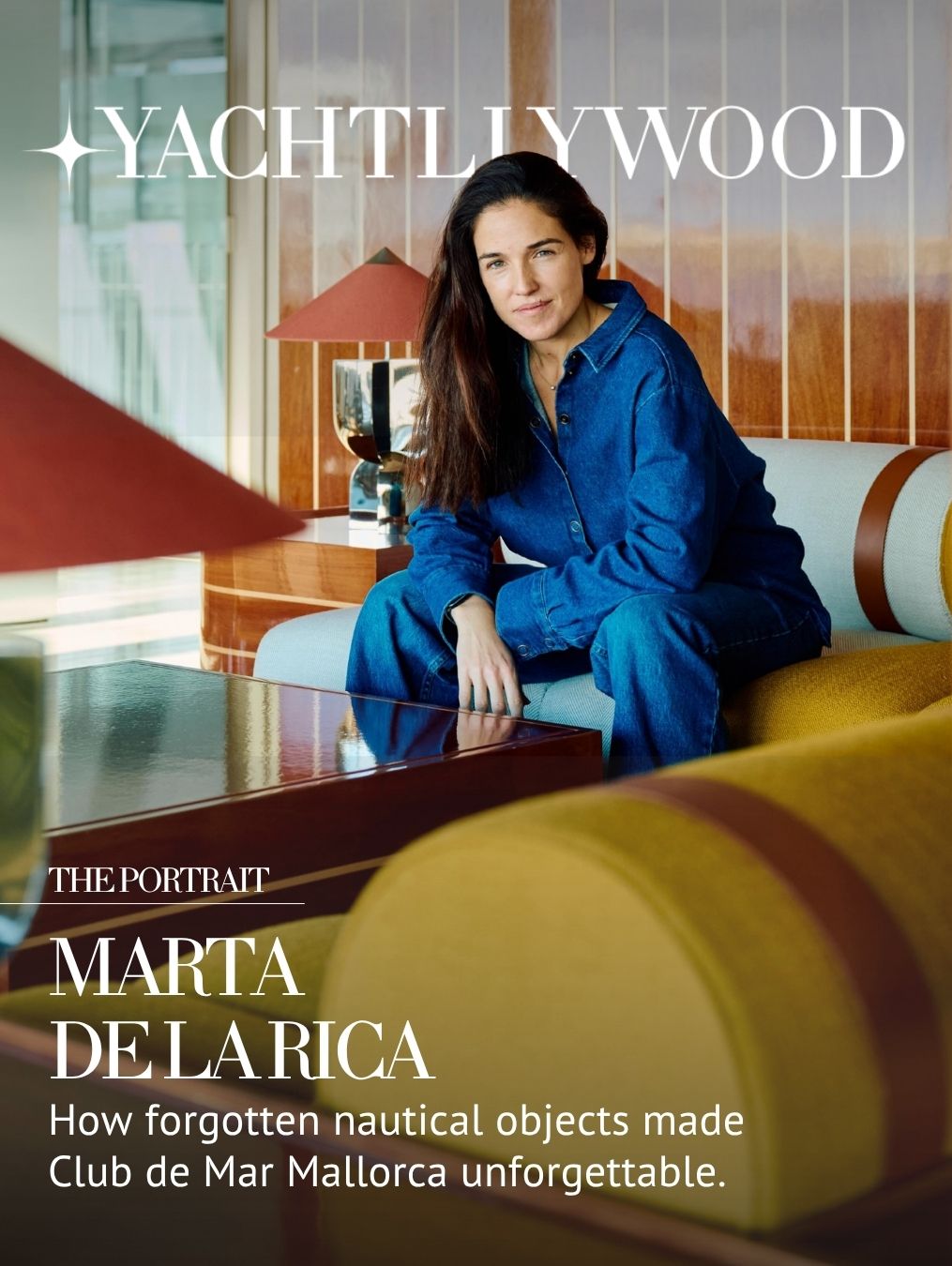
THE PORTRAIT · BY ✦YACHTLLYWOOD
Forgotten Nautical Objects. An Unforgettable Interior.
How Marta de la Rica redesigned Club de Mar Mallorca.
In 1953, Club de Mar Mallorca opened in Palma. Over the following seven decades, it accumulated what every institution accumulates: history. Objects. Evidence of what it had been.
Somewhere along the way, that evidence ended up in a storage room.
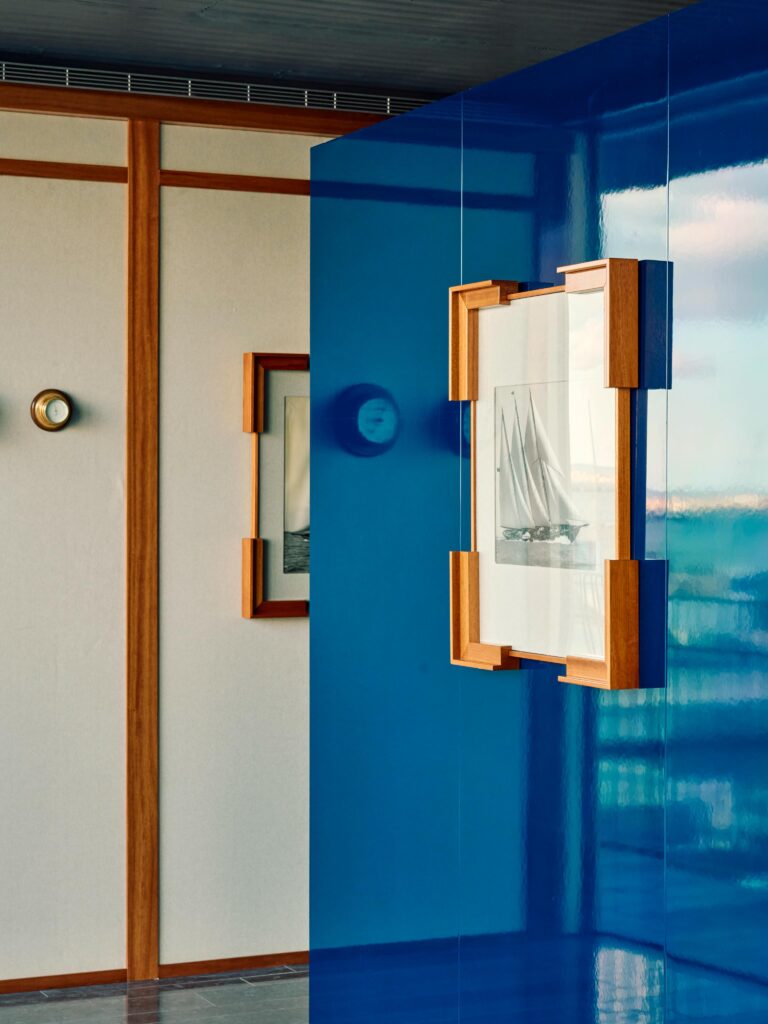
Barometers. Boat models. Anchors. Diving helmets. Pieces that had lived through the best years of the club, its regattas, its seasons, its members, stored away and left there.
When Marta de la Rica arrived to design the interiors of the club’s major refit, she found them. She put them back.
That decision, more than the teak walls or the color palette or any of the considered material choices that followed, defines what happened at Club de Mar Mallorca. Not a redesign. A return.
“Not a redesign. A return.”
De la Rica is a Madrid designer. She founded her studio in 2013 after studying at the Polytechnic University of Madrid. Her work is residential and hospitality, warm and layered, what she calls “ordered eclectic”: a way of placing things so that different periods and materials coexist without competing.
She grew up in antique markets. Her father was a collector. She learned early that the most important questions about a room are not answered in a showroom. They are answered in what already exists, in what has been kept, in what a place chose to hold on to even when it no longer knew why.
She has lived in New York. She keeps a home in Biarritz. She moves comfortably between references. But she is not someone who arrives at a project with the answer already formed.
She listens first.
“She listens first.”
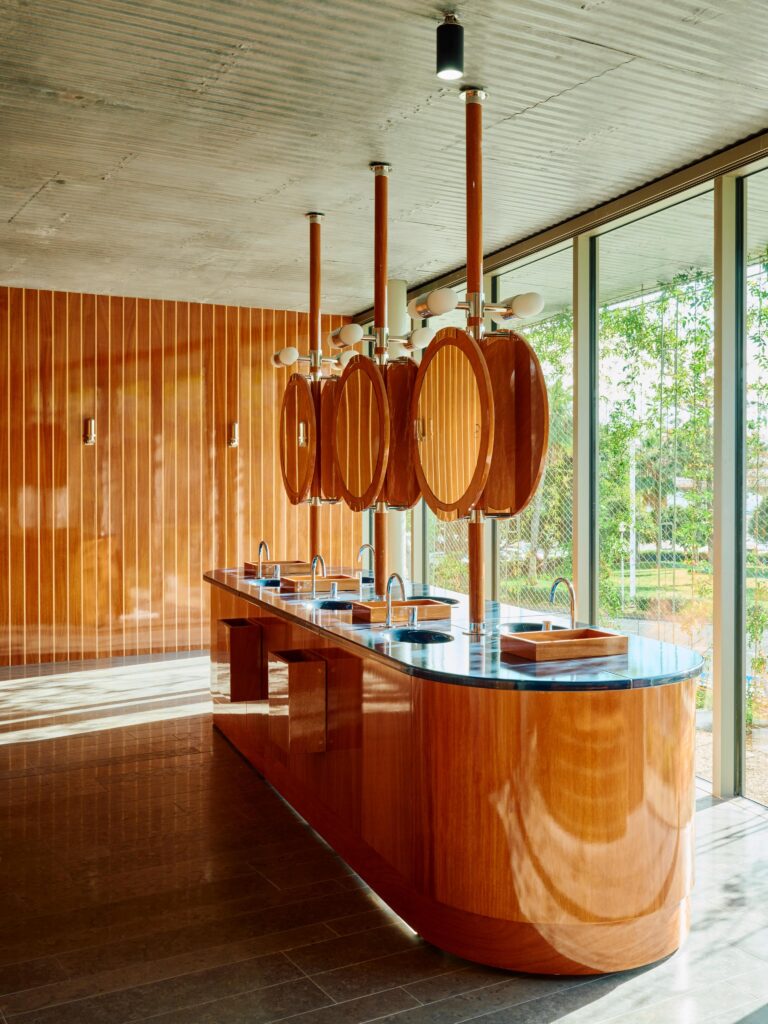
At Club de Mar, she studied old Riva boats, the teak decks, the mahogany details, the particular quality of craftsmanship that made those boats feel irreplaceable, to understand what warmth in a nautical space actually means. What it looks like when materials are chosen for how they age, not just how they appear on the day they are installed.
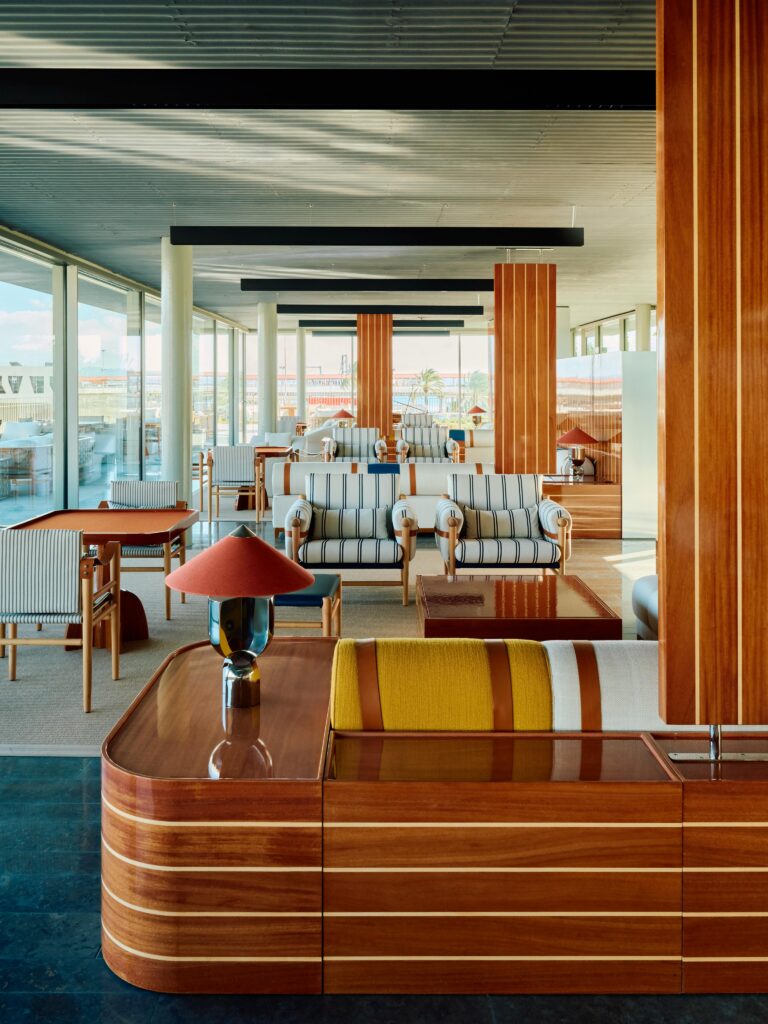
She brought that understanding into the club. Teak and sycamore across the surfaces. A cabin warmth inside rooms built for hundreds of people. The feeling of being somewhere that has already been lived in.
The color palette she drew from nautical flags. The International Code of Signals: red, blue, yellow. Not as decoration. As language. A way of being faithful to the vocabulary of the sea without quoting it directly.
And then the storage room.
The barometers came back. The boat models. The anchors. The diving helmets. Objects from the club’s own archive, returned to the rooms they had always belonged in.
“Making the ordinary extraordinary.”
“Making the ordinary extraordinary” is the phrase she uses to describe her working method. It is not a slogan. It is what happened at Club de Mar Mallorca.
The ordinary: a collection of nautical objects that nobody had looked at in years. A color palette taken from maritime signal codes. Wood that ages honestly. Materials chosen for what they feel like, not just what they cost. The extraordinary: rooms that feel inevitable. Rooms that feel like they have always been exactly this way. Rooms that do not ask for attention because they do not need it. That is the hardest thing to achieve in interior design. Spaces that feel as though no designer was involved. As though the place simply became more itself.
Club de Mar Mallorca was founded in 1953. The refit completed in 2025. New marina infrastructure, new waterfront buildings, new architecture throughout. The objects in the members’ lounge spent decades in a storage room. They are now the most interesting things in it.
There are designers who change a place. There are designers who reveal it. Marta de la Rica is the second kind. She came to Club de Mar Mallorca from Madrid, with no yachting background, no previous work in the industry. She studied old Riva boats to understand the language of the sea. She opened a storage room. She looked at what had been forgotten. Then she made it impossible to forget.
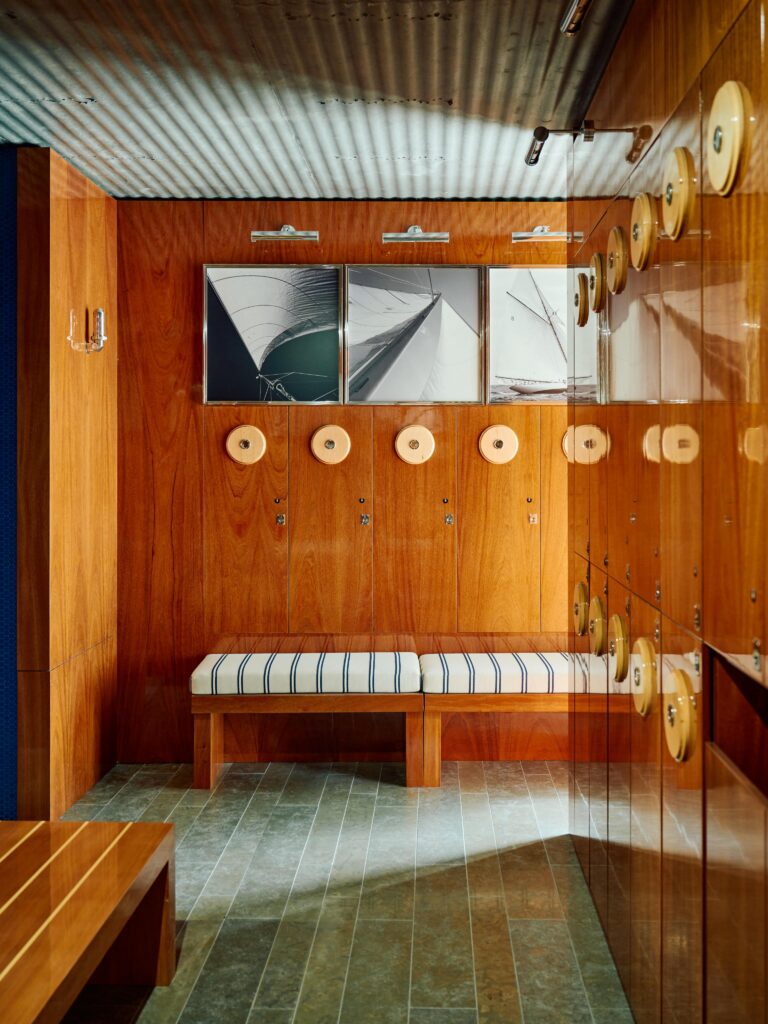
“There are designers who change a place. There are designers who reveal it.”
In Project C, my proudest achievement is the development of sustainable products created exclusively for Feadship, materi- als and finishes that respect the environment without compromising on luxury. This wasn’t just a design choice; it was personal. Growing up in Cyprus, I was surrounded by a culture that valued resourcefulness, where nothing was wasted and nature was treated with quiet reverence. The textures, colours, and natural rhythms of the island became a subconscious archive I’ve drawn on my whole life.
For Feadship, I channeled that heritage into innovation, reimagining traditional tech- niques with modern sustainability in mind. From responsibly sourced materials to finishes with a reduced environmental footprint, each choice was a deliberate step toward a more conscious future for yachting. These elements blend seamlessly into Project C’s aesthetic, proving that sustainability and beauty are not opposites, but partners in creating something timeless.
For me these are more products than design features, they area bridge between where I come from and where the industry is going.
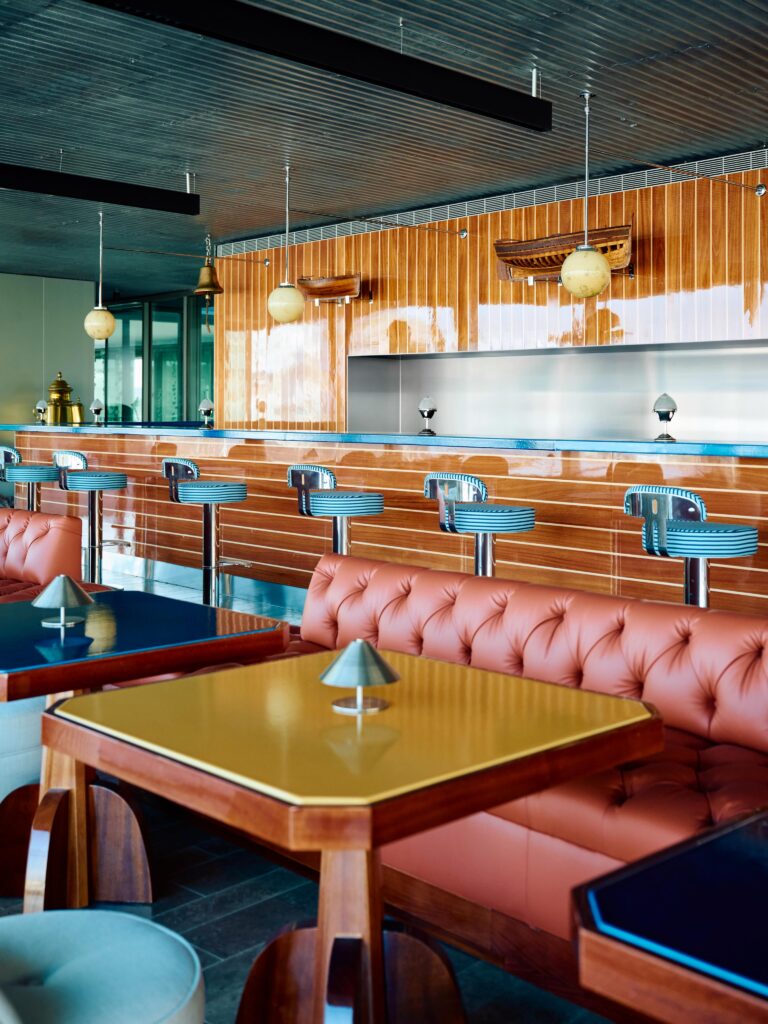
Photography by Daniel Schaefer Studio
Marta de la Rica Studio is based in Madrid.
The Club de Mar Mallorca refit was completed in 2025.