
THE PORTRAIT by✦YACHTLLYWOOD
What Yachting Can Learn From the Luxury of TimE
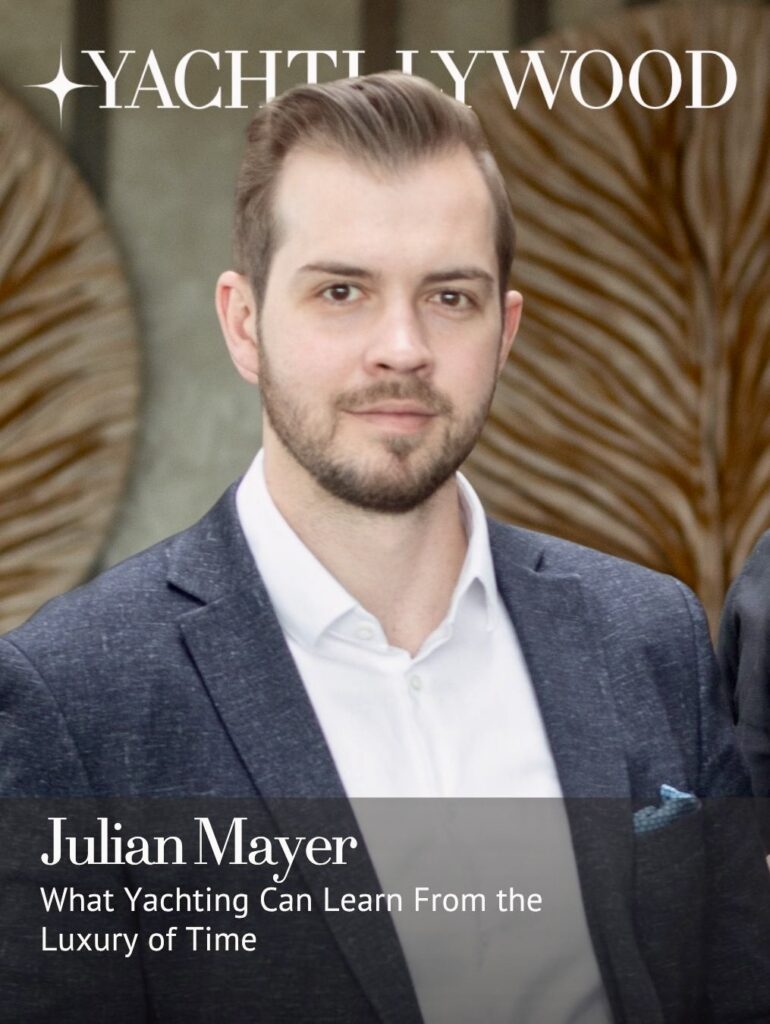
Julian Mayer, Managing Partner, Familux Resorts
For Julian Mayer, third-generation Managing Partner of Familux Resorts, creating a successful family holiday is not about asking parents to leave real life at the door. It is about understanding how they actually arrive, what children and adults need from the same experience, and gradually removing the decisions that prevent them from enjoying it. It is a philosophy developed over nearly four decades of family hospitality, and one with interesting parallels for life at sea.
Luxury hospitality and yachting share an unusual challenge. Both are expected to create experiences that feel effortless, even though an extraordinary amount of thought, service and organisation sits behind them. Add children, different generations and the realities of modern working life, and the question becomes more complex: how do you create an environment that genuinely works for everyone?
It is a question Julian Mayer knows well. His family’s story began with a small guesthouse in Lermoos, Austria, which gradually developed into a hotel. Then, in 1996, the family made the decision that would define the business: they would specialise exclusively in families with children, accepting no bookings without kids.
At the time, it was a bold decision. For Mayer, however, the principle behind it remains straightforward. “We believed that doing one thing properly was always going to be more powerful than trying to be everything to everyone.”
Today, Julian and his brother Florian represent the third generation of the family business. Familux has grown to four resorts across Austria and Germany, but the original idea remains remarkably specific: rather than being luxury hotels that also accommodate children, the entire experience is designed around families. And that distinction changes the definition of luxury itself.
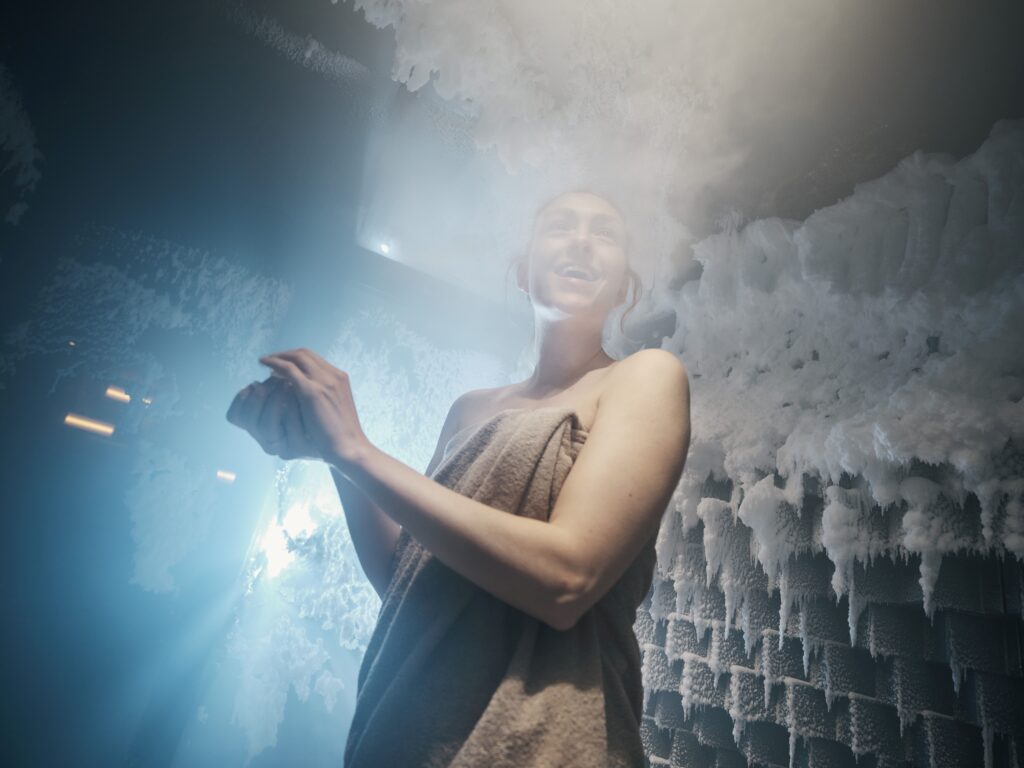
WHEN LUXURY MEANS FEWER DECISIONS
“True luxury for a family isn’t about marble lobbies,” Mayer says. “It’s about a holiday where every single detail has been designed with them in mind, from the first morning to the last evening.”
Most parents, he observes, do not arrive at a resort instantly relaxed. They arrive “still half in work mode,” checking their phones and mentally revisiting everything they have left behind. Familux does not attempt to force that transition. Instead, Mayer describes a gradual process of removing decisions until there is increasingly little left for parents to manage.
Meals are taken care of. Children spend time with Kids Coaches. Parents begin to settle into the experience at their own pace.
“Slowly, parents remember what it feels like to just be there,” he says. “That’s the moment we’re building for.”
It is here that the parallel with yachting becomes particularly interesting. The finest service, whether in a resort or aboard a yacht, is often defined by what the guest no longer has to think about. The complexity remains, but it happens elsewhere.
Mayer’s approach is also deliberately realistic about connectivity. Familux has incorporated parent lounges and dedicated spaces where guests can work if necessary, not because the objective is to keep them connected, but because pretending that professional responsibilities simply disappear on holiday would ignore how many people actually live.
“If a parent knows there’s a quiet corner with good Wi-Fi if they truly need it, they relax faster,” he explains. “Paradoxically, providing the option is often what makes it unnecessary.”
According to Mayer, most guests stop reaching for their phones by the second day.
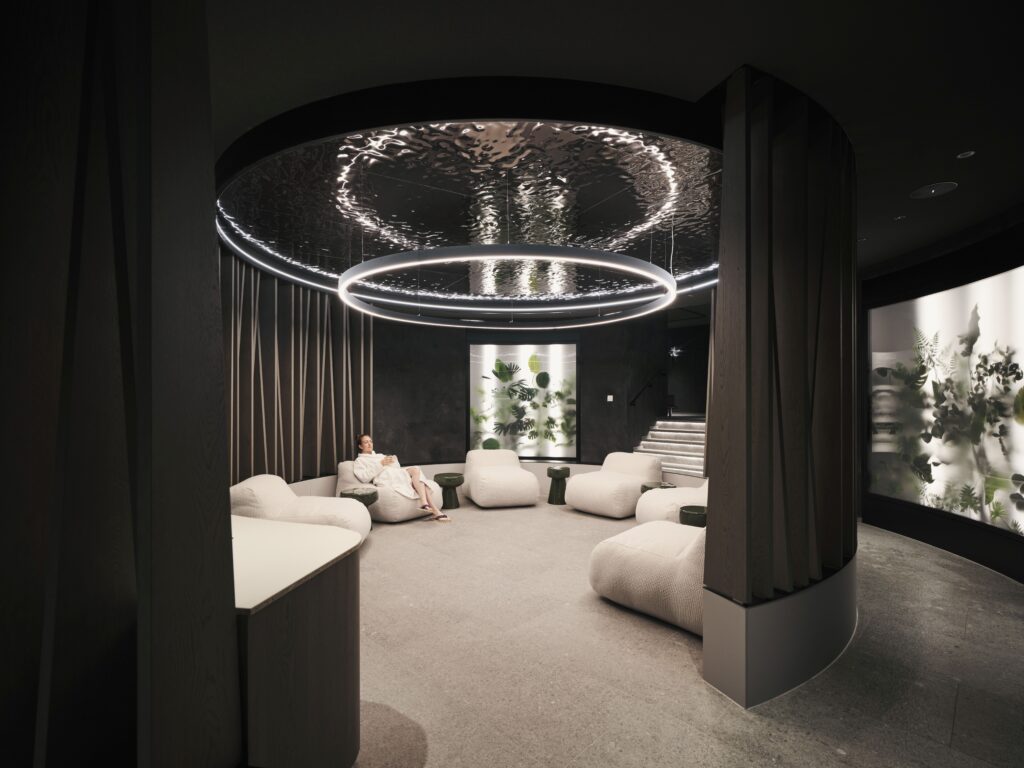
ONE FAMILY, DIFFERENT NEEDS Mayer’s definition of wellness is equally revealing. For a single traveller, he suggests, wellness might mean an afternoon at the spa. For a family, the equation is different.
“For a family, it means something much harder to manufacture: genuine presence. A parent who isn’t worrying. A child who is completely absorbed in something wonderful. Time together that feels chosen rather than scheduled.”
Achieving that does not necessarily mean keeping the family together at every moment. Familux offers professional childcare from the seventh day of life, adults-only spa areas and spaces designed so that children and parents can each have what they need at the same time.
That distinction has particular relevance to yachting. A family experience is rarely one experience. Different generations may share the same holiday while wanting entirely different things from it. Designing successfully around families therefore requires understanding both the moments they want to spend together and those they do not. For Mayer, that understanding has been built over decades.
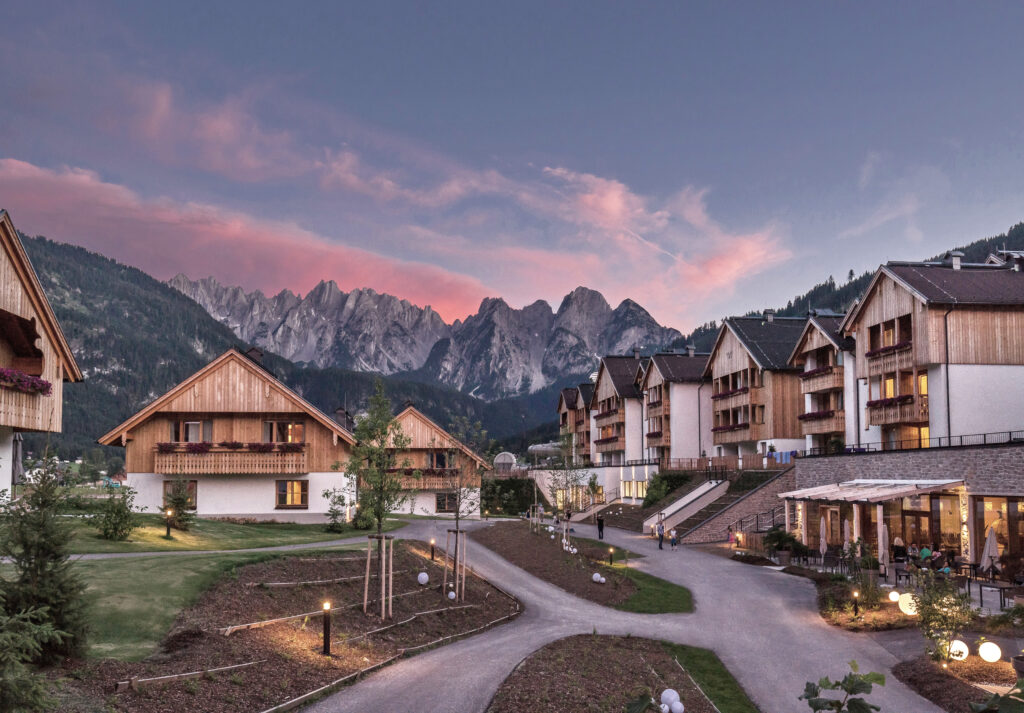
THREE GENERATIONS, SAME HOUSE
Perhaps the clearest evidence of Familux’s longevity is not found in the number of resorts it operates, but in the families who continue to return. Mayer recalls one family staying at the group’s newest resort eight times during its first year, but the stories that mean most to him are quieter.
“Parents who came to Alpenrose as children now arrive with their own kids, and sometimes with their own parents in tow. Three generations, same house.”
For Julian, some of those relationships are personal. Guests his own age effectively grew up alongside him at the hotel, sharing the rhythms of the same place year after year. Some remain friends today.
“That’s not a marketing result,” he says. “That’s forty years of doing the same thing properly, and building friendships along the way.”
There is a symmetry to Julian and Florian now representing the third generation of the Mayer family while welcoming three generations of guests through their doors. It also explains why growth is approached carefully. Familux currently operates Alpenrose in Tyrol, Dachsteinkönig in Upper Austria, Oberjoch in Bavaria and The Grand Green in the Thuringian Forest. The group is exploring three additional European locations, including destinations on the Baltic Sea and in the Dolomites, while continuing to invest in its existing properties.
Yet Mayer says every potential property begins with the same question: can the Familux standard be delivered there fully and without compromise?
“Growth is only worthwhile if the guest experience remains intact.”
SWITCHING OFF ISN'T SO SIMPLE
“There is, however, an interesting personal reality behind a business dedicated to helping families relax: Mayer himself finds switching off difficult.“Honestly, it’s the hardest part,”
he admits.
Even after putting away his phone and laptop, staying in a hotel means he continues to observe it professionally. He notices the processes, design decisions and economics behind the experience.
“The mind doesn’t switch off just because the inbox does.”
What works for him is distance, ideally accompanied by a completely different time zone. During the first two years of his twin daughters’ lives, the family travelled to Vietnam, Singapore, Bali and Australia. Being sufficiently far away, he says, makes it harder for the business to reach him. There is an obvious alternative. Mayer could avoid hotels altogether. “The logical answer, of course, would be to rent a self-catering holiday home and remove the temptation altogether,” he says. “But I enjoy being in a hotel far too much, the service, the small details, all of it.” So he has accepted that he may never switch off completely.
That admission makes his perspective on hospitality more interesting, not less. Familux is not built around the assumption that guests arrive ready to disconnect. Mayer’s own answers suggest almost the opposite: people arrive carrying the habits, responsibilities and distractions of everyday life with them. The role of hospitality is to create an environment in which those things can gradually become less important.
There is a lesson here that travels easily from a resort to a yacht. Families do not become different people simply because they step aboard. Parents may still need to work. Children and adults will not always want the same thing. Different generations will experience the same space differently. The challenge is not to prescribe how they should spend their time, but to create the conditions in which they can spend it as they choose. For Mayer, the process begins with understanding those realities rather than designing around an idealised version of them. His advice to a family arriving for the first time is therefore appropriately simple.
“Give it 24 hours. Don’t try to switch off, just let the resort do its job.”
In hospitality, as in yachting, perhaps the next evolution of luxury will not be measured by how much can be added to an experience, but by how much friction can be quietly removed from it. The decisions, the logistics, the interruptions and the persistent feeling that there is somewhere else you should be. Mayer may not have mastered the art of switching off himself. “I’ve made my peace with never quite switching off,” he admits. Yet perhaps that is precisely why his perspective matters. Whether in a resort in the Alps or somewhere far beyond the shoreline, the rarest luxury may ultimately be the same: the freedom to be completely where you are.
(IMAGE COURTESY by Familux)